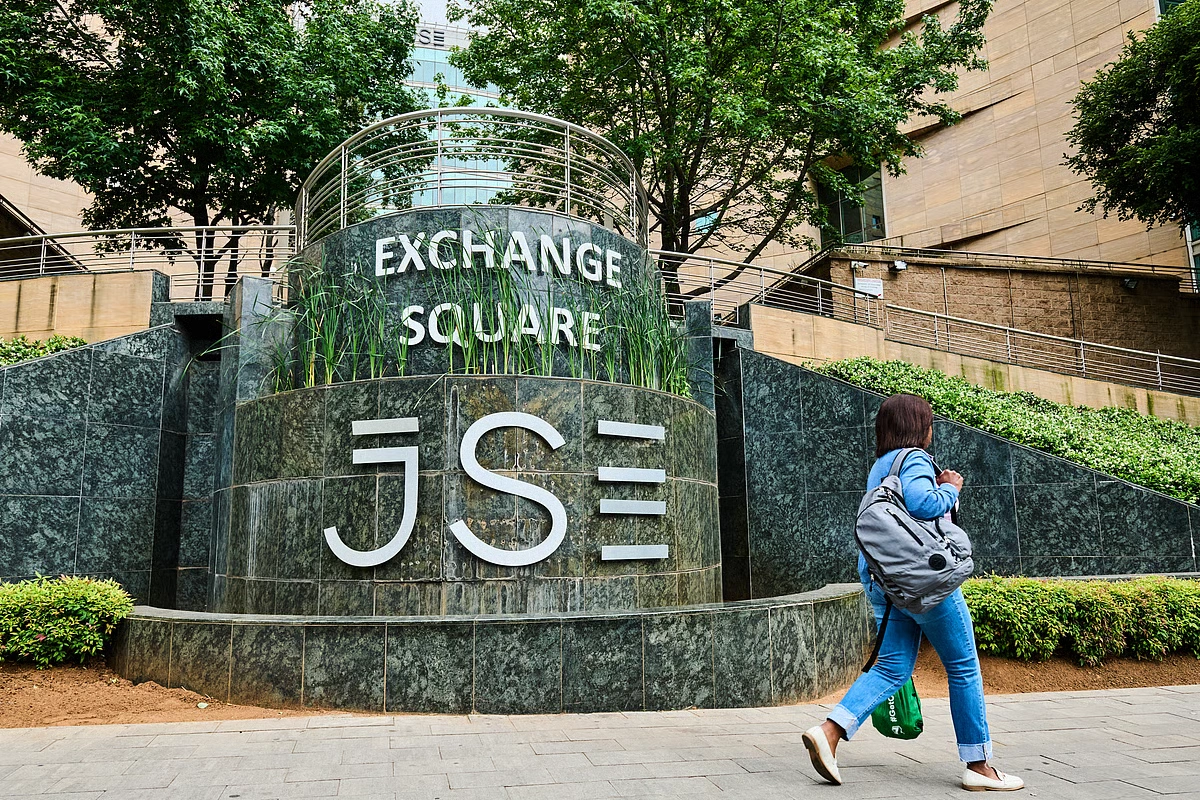
South African stocks are on track for their worst monthly performance in nearly two decades, with the Johannesburg Stock Exchange (JSE) under heavy pressure from declining metal prices and a sharp pullback in investor sentiment.
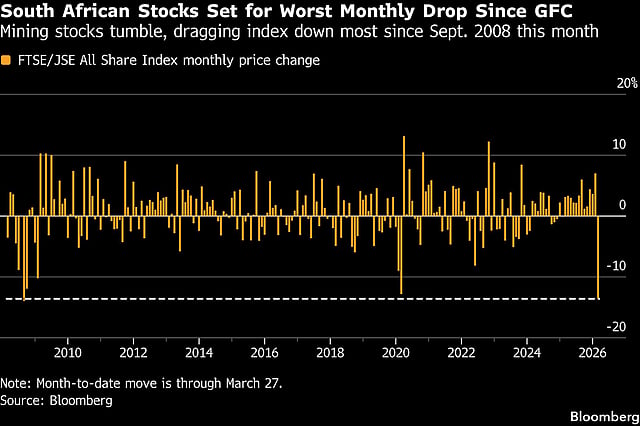
The FTSE/JSE All Share Index has fallen 13% for the month through March 27, marking its steepest drop since the Global Financial Crisis. This downturn follows an exceptional run of 12 consecutive monthly gains through February—the longest streak on record.
Mining Sector Leads Market Decline
The selloff has been driven largely by the precious metals and mining sector, which makes up roughly 25% of the index. Since the outbreak of the Middle East conflict involving Iran, the sector has plunged 27%, erasing earlier gains as gold and platinum prices declined sharply.
This drop reflects a broader retreat from emerging markets, as rising oil prices and geopolitical tensions fuel fears of higher inflation and tighter monetary policy globally.
Investor Sentiment Turns Risk-Off
According to analysts at SBG Securities, profit-taking and de-risking in precious metals have intensified the pressure on South African equities.
After gaining 43% in the 12 months leading up to February—driven by surging gold prices and easing inflation—South African stocks are now among the worst-performing globally. Markets in Dubai, Indonesia, and South Korea have recorded steeper losses since the conflict began.
The downturn is not limited to mining. Key sectors including construction, retail, and banking have each declined by more than 10% during the month.
Is This a Buying Opportunity?
Despite the selloff, some investors see potential upside. Analysts at SBG Securities maintain an overweight stance on South African equities, noting that foreign investors remain net buyers year-to-date.
Cedric Beguier of AXYS Group highlighted that while the JSE typically reacts negatively during the early stages of geopolitical conflict, it often proves more resilient over time due to its liquidity and strong resource sector.
Outlook: Inflation and Interest Rates in Focus
However, risks remain elevated. The South African Reserve Bank has already raised its inflation forecasts, warning that prolonged geopolitical tensions could lead to sustained high energy prices and further interest rate hikes.
Analysts at Avior Capital Markets caution that higher rates and slower economic growth could deepen losses across sectors such as retail, banking, property, and insurance.
In a sustained risk-off environment, emerging markets like South Africa may continue to face downward pressure as global investors shift toward safer assets.